
📜 History of Japanese Whisky
Early Beginnings (1870s–1920s):
Whisky was first introduced to Japan in the late 19th century, mainly through imported Scotch whisky.
In 1923, Shinjiro Torii, founder of Suntory, established Japan’s first whisky distillery, Yamazaki, near Kyoto.
Around the same time, Masataka Taketsuru, who studied distilling in Scotland, partnered with Torii before later founding Nikka Whisky in Hokkaido (Yoichi distillery) in 1934.
Their vision was to create whisky suited to the Japanese palate – smoother, delicate, and balanced compared to the heavier Scottish styles.
Post-War Popularity (1950s–1980s):
Whisky boomed in Japan, with Suntory and Nikka leading the market. Highball cocktails (whisky + soda) became a national favorite.
Modern Recognition (2000s–Today):
Japanese whiskies began winning international awards, such as Yamazaki 12 Year (World Whisky Awards). Today, Japan is recognized globally as a premium whisky-producing nation.
🌾 Ingredients Used
Japanese whisky follows Scotch traditions but with unique Japanese precision:
- Grains:
Malted Barley (imported from Scotland & locally grown)
Corn (especially for blended whiskies)
Occasionally wheat or rye in experimental blends
- Water:
Extremely pure spring water is considered essential (e.g., Yamazaki uses water from Mt. Tennozan).
- Yeast:
Multiple strains used for delicate fermentation and unique flavor complexity.
- Cask Types (Oak):
American White Oak (vanilla, caramel sweetness)
European Oak (Sherry casks, Spanish oak) (rich dried fruits, nuttiness)
Mizunara Japanese Oak (unique sandalwood, coconut, oriental spice flavors)
🏭 Production Process (Step by Step)
- Malting – Barley soaked, germinated, dried (some imported malt is already peated).
- Mashing – Ground malt mixed with hot water to extract sugars.
- Fermentation – Yeast added, producing “wash” (beer-like liquid).
- Distillation – Typically double-distilled in copper pot stills (similar to Scotch).
- Maturation – Whisky aged in oak barrels (often Mizunara, Sherry, or American Oak).
- Blending / Bottling – Master blenders carefully balance multiple styles for harmony.
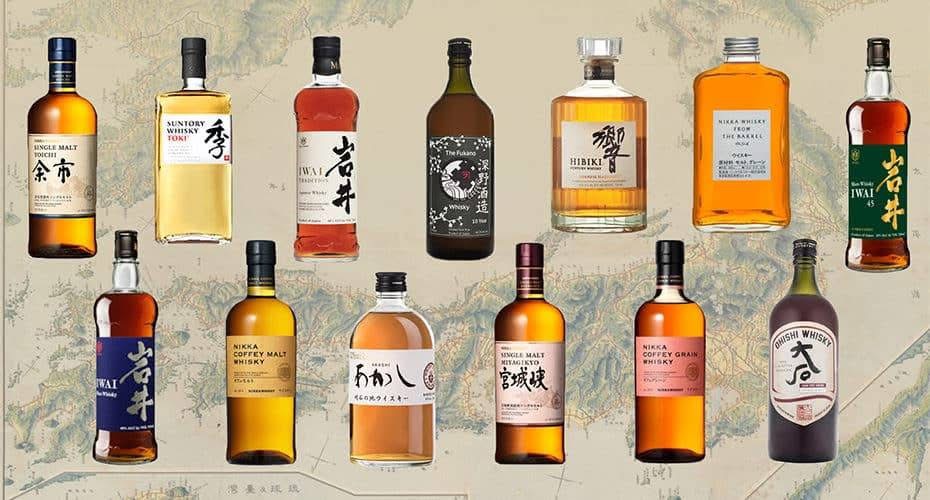
🥃 Types of Japanese Whisky
- Single Malt Whisky – Made from 100% malted barley, distilled at one distillery.
- Blended Whisky – Mix of malt and grain whiskies, lighter and smoother.
- Grain Whisky – Produced mainly from corn/wheat, often column-distilled.
- Pure Malt (Blended Malt) – Blend of malt whiskies from different distilleries.
- Single Grain Whisky – From grains other than malted barley, one distillery only.
📍 Whisky-Producing Regions in Japan
- Yamazaki (Kyoto Prefecture)
First and most iconic distillery
Known for humid climate, perfect for aging in Mizunara oak
- Yoichi (Hokkaido)
Coastal & cold climate, reminiscent of Scotland
Produces rich, smoky, peaty whisky
- Miyagikyo (Sendai, Northern Honshu)
Mountainous region with fresh air & clean water
Lighter, floral, and fruity whiskies
- Chichibu (Saitama Prefecture)
Craft & small-batch distillery
Experimental casks, innovative methods
- Hakushu (Japanese Alps, Yamanashi Prefecture)
Surrounded by forests and pure spring water
Fresh, herbal, green-flavored whiskies
🌟 Famous Japanese Whisky Types with Notable Brands
- Single Malt Japanese Whisky
Brands:
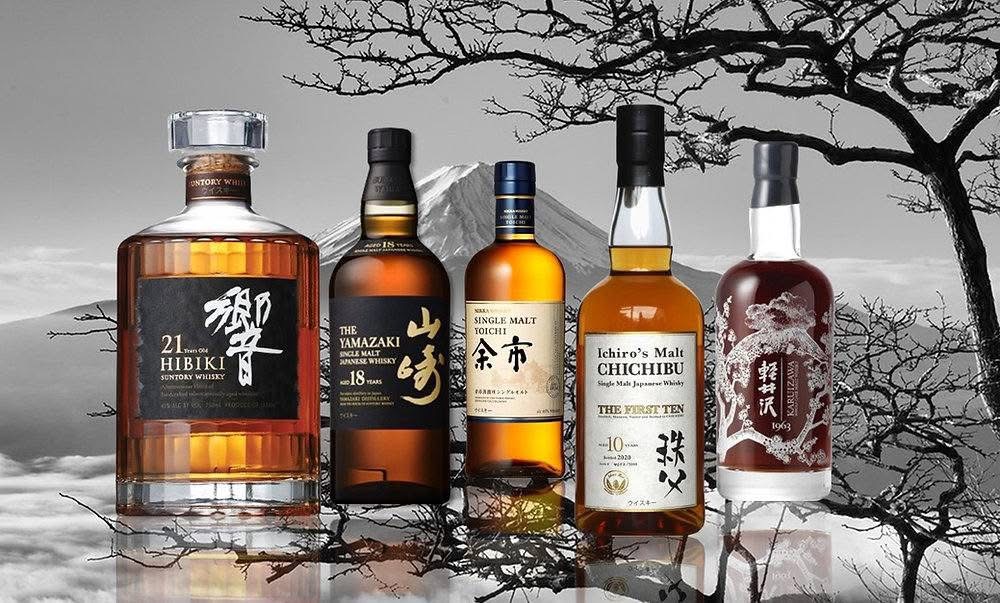
- Yamazaki
- Hakushu
- Yoichi
- Miyagikyo
- Chichibu
Ingredients: 100% malted barley, water, yeast
Oak Used: Mizunara, Sherry casks, American Oak
- Blended Japanese Whisky
Brands:
- Hibiki (Suntory)
- Nikka From the Barrel
- Suntory Kakubin
- Mars Iwai Tradition
- White Oak Akashi
Ingredients: Malt + Grain whisky (barley, corn, wheat)
Oak Used: American Oak, Mizunara, Sherry
- Grain Whisky
Brands:
- Chita (Suntory)
- Nikka Coffey Grain
- Kirin Fuji-Sanroku Grain
- Eigashima White Oak Grain
- Mars Komagatake Grain
Ingredients: Corn, wheat, some malted barley
Oak Used: American Oak (ex-bourbon barrels), Mizunara
- Blended Malt (Pure Malt)
Brands:
- Nikka Pure Malt (Red, Black, White)
- Ichiro’s Malt “Double Distilleries”
- Taketsuru Pure Malt
- Matsui Kurayoshi Malt
- White Oak Akashi Pure Malt
Ingredients: 100% malted barley from multiple distilleries
Oak Used: Mizunara, American Oak, Sherry casks
- Single Grain Whisky
Brands:
- Suntory Chita Single Grain
- Nikka Coffey Grain
- Kirin Fuji Single Grain
- Eigashima Akashi Single Grain
- Mars Tsunuki Single Grain
Ingredients: Corn, wheat, rye (depending on distillery)
Oak Used: American Oak, ex-bourbon casks
🌳 The Role of Japanese Mizunara Oak
Mizunara oak is unique to Japan.
Difficult to work with (porous, fragile) but imparts distinct aromas: sandalwood, incense, coconut, oriental spices.
Considered one of the most prized cask types in the world for its complexity.